It is one of the first questions developers ask
“How many CGIs do we need?”
It sounds like a straightforward production question, but the answer should not really begin with a number.
It should begin with the marketing strategy.
CGI is often one of the largest creative investments within a new homes campaign. The images may appear across websites, brochures, signage, social media, advertising portals, digital campaigns and sales presentations.
Choosing the right CGI suite therefore means thinking about how each image will actually be used.
The objective should never be to produce the largest possible collection.
It should be to create the most useful collection.
Every CGI should have a purpose
Before commissioning an image, ask what question it answers for the buyer.
An exterior streetscape may establish the architectural character of the development.
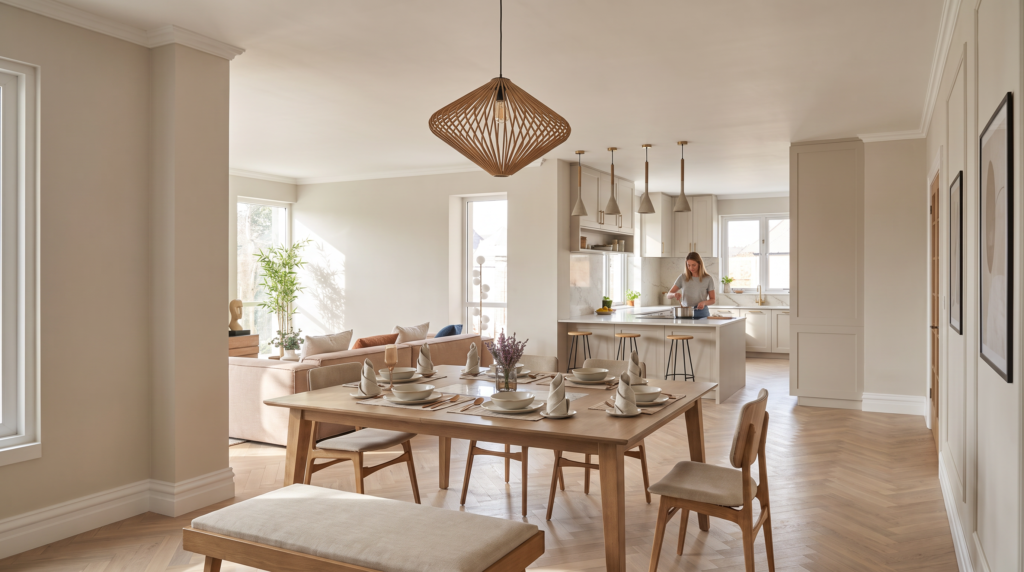
An interior kitchen image may communicate specification and quality.
A rear garden image can help buyers understand private outdoor space.
An aerial may explain the scale and layout of the scheme.
A lifestyle image may create a stronger emotional connection.
Each image should contribute something different.
If several CGIs are communicating almost exactly the same information, the budget may be better invested elsewhere.
Start with the buyer journey
Someone discovering a development for the first time needs a different image from someone comparing individual house types.
At the awareness stage, imagery needs impact.
A strong hero CGI should immediately communicate the architecture, atmosphere and positioning of the scheme.
As the buyer moves further into the decision making process, they require more detail.
What does the kitchen look like?
How large does the living space feel?
What is the relationship between the house and garden?
What will the streetscape look like when landscaping matures?
CGI planning should follow this journey.
A strong hero image is essential
Most developments benefit from having one image that becomes visually synonymous with the project.
This might be a striking streetscape, an apartment exterior, a landscaped entrance or an elevated architectural view.
It is the image that may appear on the website homepage, brochure cover, outdoor advertising and digital campaigns.
Because of its importance, this CGI deserves disproportionate attention.
Camera position, landscaping, lighting, styling and atmosphere should all be carefully considered.
Producing ten average CGIs will rarely provide more value than having one exceptional hero image supported by a carefully selected secondary suite.

Interior CGI needs variety
Interior imagery can become repetitive very quickly.
Three slightly different angles of the same kitchen may be technically useful, but they do not necessarily broaden the marketing story.
A more useful suite might show different aspects of the home.
Kitchen and dining.
Main living space.
Principal bedroom.
Home office or flexible living area.
The aim is to help buyers mentally construct the experience of the home rather than simply document each room.
Styling should also reflect the intended audience.
Furniture, artwork, lighting and accessories all contribute to positioning.
Think beyond the brochure
CGIs are often commissioned with a brochure in mind.
That can be limiting.
Modern property campaigns require imagery in numerous formats.
Websites favour wide cinematic compositions.
Instagram often requires square or portrait crops.
Digital advertising may need several different ratios.
Outdoor advertising needs clarity at distance.
Property portals require images that remain effective as small thumbnails.
Thinking about these applications during CGI production can significantly extend the usefulness of each image.
Sometimes the solution is not an entirely new CGI.
It may simply involve creating alternative camera crops or compositions from the same scene.
CGI should work together as a visual system
A successful CGI suite should feel cohesive.
Lighting conditions should complement one another.
Landscaping should be consistent.
Interior styling should feel part of the same development.
Architecture and materials must remain accurate.
The images should also align with the development brand.
If the brand is calm and refined, excessively dramatic CGI may feel inappropriate.
If the development is positioned around vibrant urban living, imagery that feels empty and static may undermine that message.
Art direction is what turns a collection of architectural visualisations into a marketing campaign.
Consider phasing
Large developments may not need every CGI at launch.
If several phases will be released over time, producing imagery strategically can be more efficient.
The initial suite might focus on the overall development and the first house types being sold.
Additional imagery can then be commissioned as future phases approach.
This also allows later visuals to respond to how buyers are engaging with the project.
If certain locations, house types or features generate more interest, future CGI can place greater emphasis on them.
So, how many do you actually need?
There is no universal number.
A small scheme may be marketed effectively with a tightly curated suite.
A large development with many house types and several phases may require considerably more.
What matters is coverage.
Do you have a powerful hero image?
Can buyers understand the exterior architecture?
Can they visualise the principal living spaces?
Can they understand the wider development?
Do you have enough variety for digital marketing?
Can the imagery support both emotional storytelling and detailed sales information?
If the answer to those questions is yes, the CGI suite is probably doing its job.
Plan images as marketing assets, not production outputs
The best CGI planning begins long before rendering.
It considers the buyer, brand, media campaign, website, brochure, sales journey and future phases.
At R.E.M. Real Estate Marketing, we approach CGI as part of the wider property marketing system.
That means deciding not simply how many images should be produced, but what each image needs to achieve.
Because the goal is not more CGI.
It is better CGI.